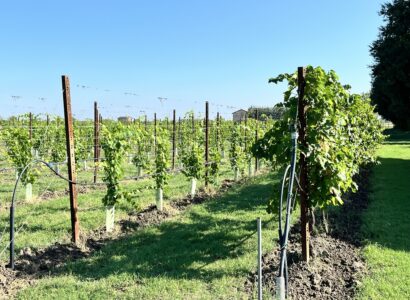
For public benefit, all persons owning land within the city district boundaries… must keep and plant three fig trees, three mulberry trees, three granary apple trees, and three almond trees, and must care for and cultivate them (Barbieri – Fonte Ambiente – Il Gelso edited by Prof. Mauro Calice, Istituto Comprensivo 4, Modena). A statutory law of the Republic of Modena dating back to 1327 tells us of the importance of the mulberry tree, renamed moro above, in the province of Modena, evidence of the ancient local production linked to this tree. In fact, in the Po Valley, as in many other parts of Italy, it is still possible to find centuries-old mulberry trees today, trees that from the 14th century until the Second World War were the true economic engine of our country.
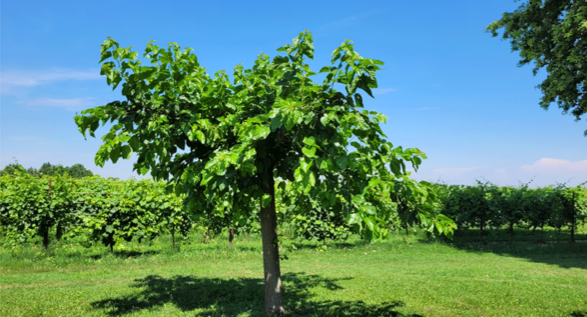
Also known as the ‘Tree with a Golden Crown’ due to its use in silk production, Morus alba – the white mulberry – has for centuries characterised not only the agricultural landscape but also local industry, bringing the first waves of industrialisation to our province. Unlike its black counterpart, which is native to the eastern shores of the Mediterranean and is also known as the ‘Gelso Moro’ (probably due to its fruit), the white mulberry is native to China. Its history, which has always been linked to that of silkworm rearing, owes its spread to the Chinese Empress Si Ling Chi, who as early as 2,700 BC noticed some caterpillars eating the leaves of the white mulberry before spinning their cocoons. Fascinated by the lustre of the thread produced – ideal for creating an empress’s veil – she ordered that these silkworms be reared. This marked the beginning of silkworm production, and with it that of the white mulberry, the only plant capable of nourishing these demanding caterpillars with its leaves. When the secret of silk production was discovered in Europe in the 15th century, both the silkworm and the white mulberry were introduced and spread rapidly. Unfortunately, in the early 20th century, with the introduction of synthetic fibres – which were undoubtedly cheaper – sericulture lost its economic importance, and with it, the cultivation of the white mulberry also went into inexorable decline
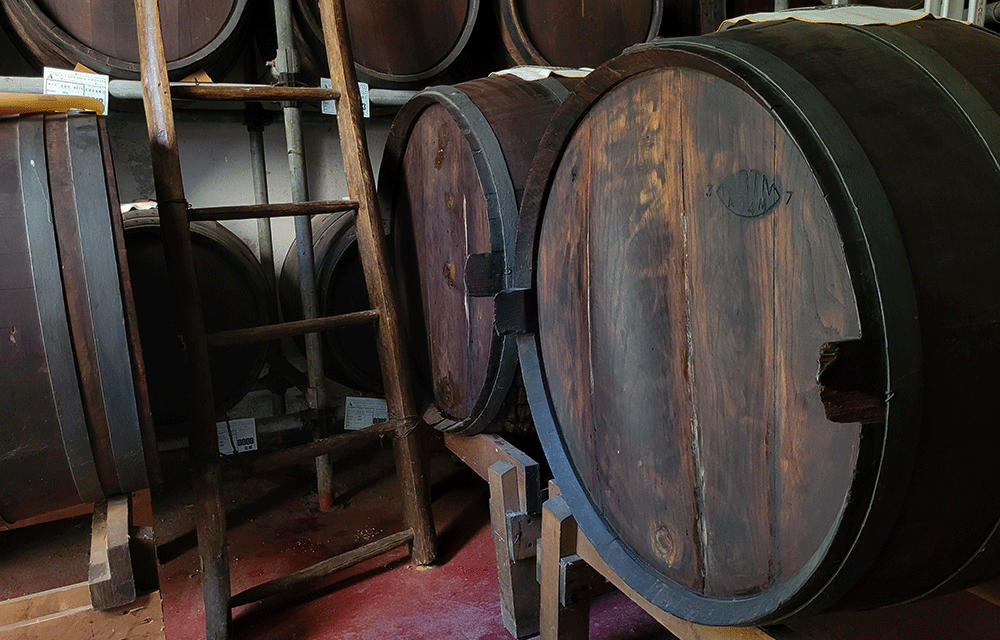
The refinement of traditional balsamic vinegar in mulberry barrels
Thus, from being a “silk” tree, the mulberry tree has become the silk tree for us, thanks to the characteristics of its wood: soft and very porous, particularly suitable for containing vinegar, mulberry wood guarantees a high oxygen exchange and good evaporation.
The mulberry wood barrel is part of the traditional Acetaia del Cristo wood collection, along with cherry, juniper, oak, and chestnut. Each collection can vary in composition, ranging from a minimum of five barrels made of different woods: the shapes, volumes, and woods from which the collections are composed are the most precious secret of the vinegar producer.
While tradition dictates that each set be made up of different barrels, both in terms of size and type of wood, what has always distinguished Acetaia del Cristo is the use of sets of single-wood barrels, to create vinegars characterized by unmistakable flavors and aromas attributable to the essence. Therefore, in addition to the traditional sets composed of different woods, or the cherry sets alone, Acetaia del Cristo now features sets made exclusively of mulberry wood.
Mulberry was the third single-wood barrel developed at Acetaia del Cristo, after cherry and juniper, also linked to the ancient use of this material for the production of older barrels, such as the Lambrusco barrels from Bologna: the mulberry tree was always cut down to feed silkworms, rapidly expanding in the barrel, thus providing wide planks for making large barrels.
Mulberry single essences
At Acetaia del Cristo, we can boast being among the few, if not the only, producers of Traditional and Extra Vecchio Balsamic Vinegar of Modena DOP aged exclusively in mulberry barrels. This uniqueness is thanks to the long history of our Acetaia, which has continued its work for four generations. The Traditional Balsamic Vinegar of Modena DOP aged in mulberry barrels reflects the sweet yet tart flavor of white mulberries, lending an extremely fresh taste as well as distinct fruity notes.
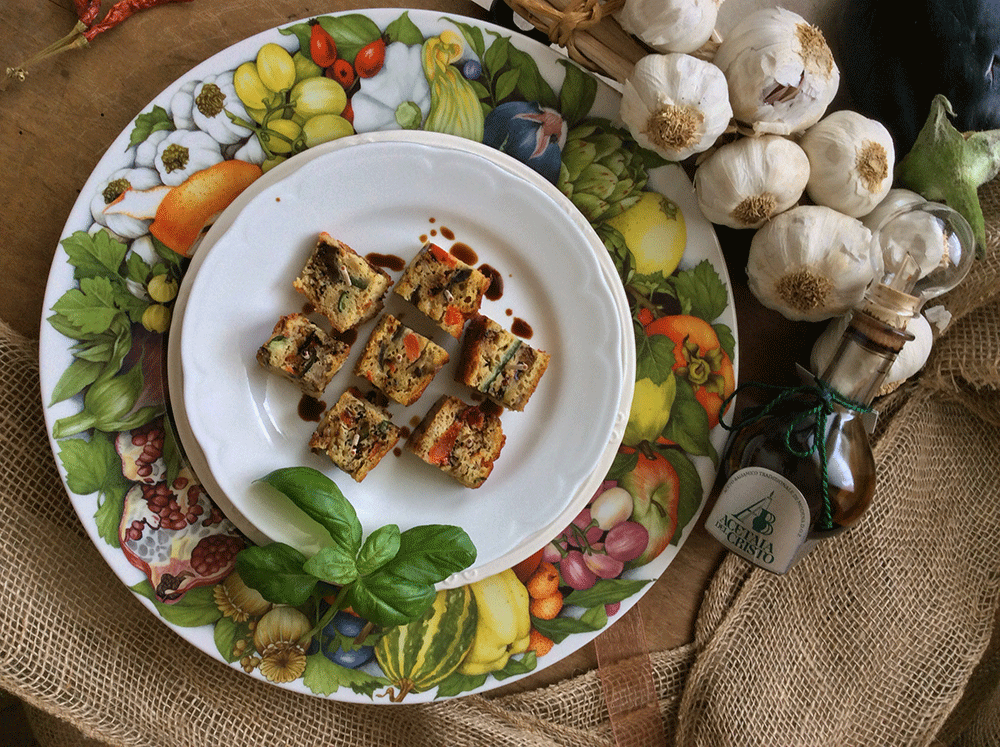
Traditional Balsamic Vinegar of Modena DOP, aged for at least 12 years in mulberry barrels, is a delicious vinegar, the result of over 12 years of aging in this wood, which imparts a reassuring flavor along with its balsamic notes. The best way to pair Traditional Balsamic Vinegar of Modena DOP with mulberry barrels is to pair it with natural ingredients, creating a quick and delicious recipe. One example is Baked Omelette Cubes with Grilled Vegetables and Balsamic Vinegar.
Traditional Modena DOP aged in mulberry barrels, prepared for us by our friend Lorena Terenghi of the blog Bricioledisapori.it. > Click here for the recipe
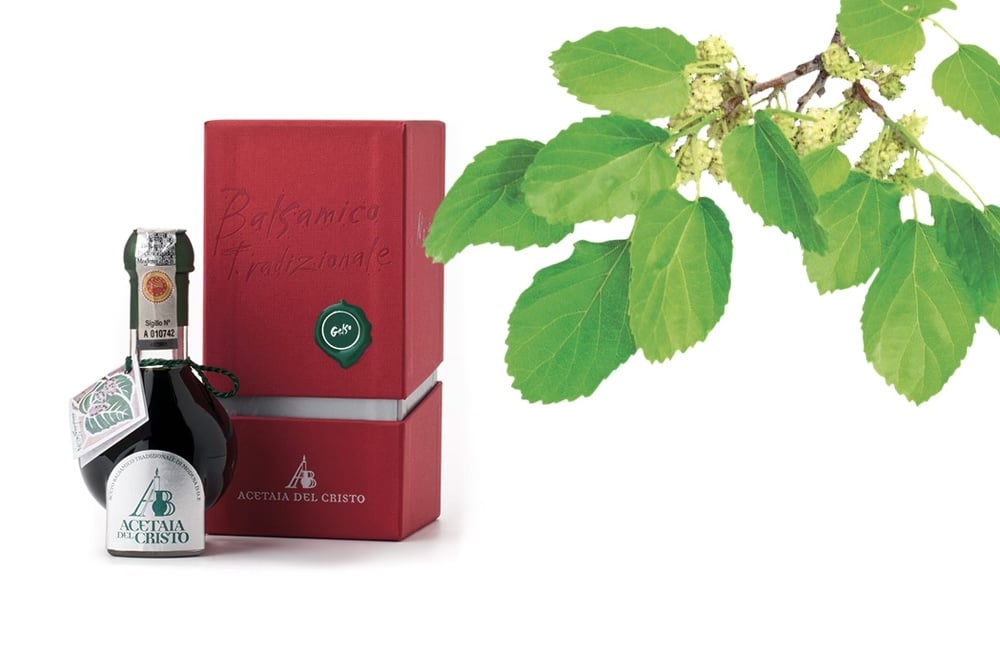
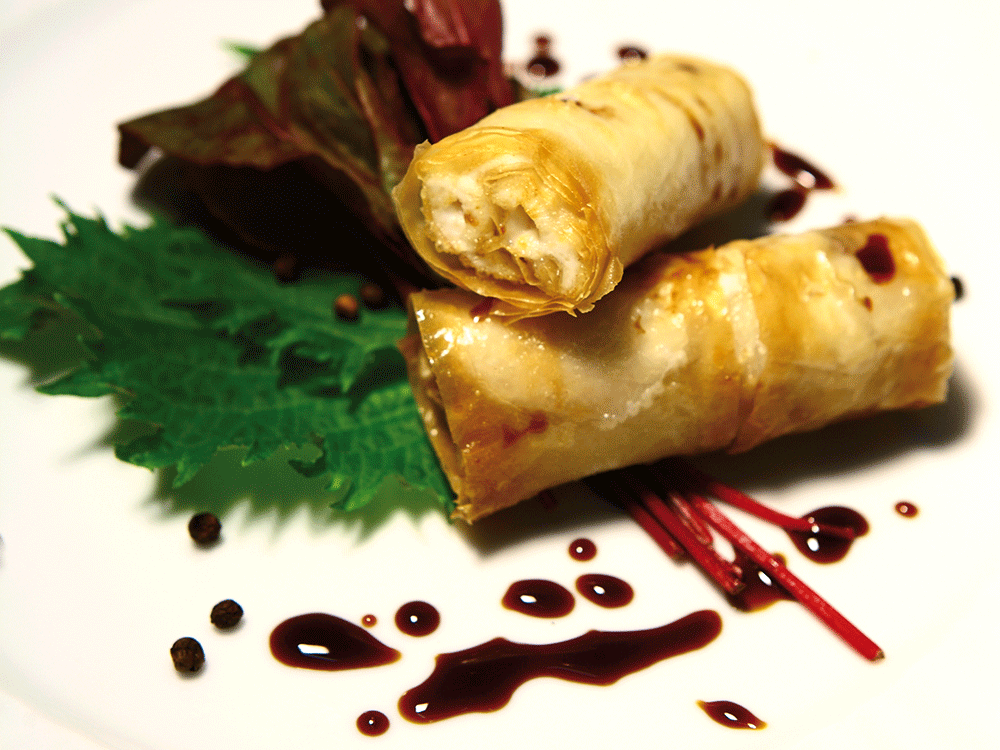
For those who prefer longer refinements, the Traditional Balsamic Vinegar of Modena DOP Extra Vecchio Gelso has developed the sweet and sour contrasts of the white berry, combining them with the typical characteristics and consistency of an Extra Vecchio Balsamic.
It is great on boiled meat and fish, as well as shellfish, but to accompany our hot summers we recommend trying a tasty and refined, yet simple and quick recipe, created for us by Chef Bruno Barbieri: Sea bass rolls with Vecchio Gelso Extra Balsamic Vinegar > click here for the recipe.
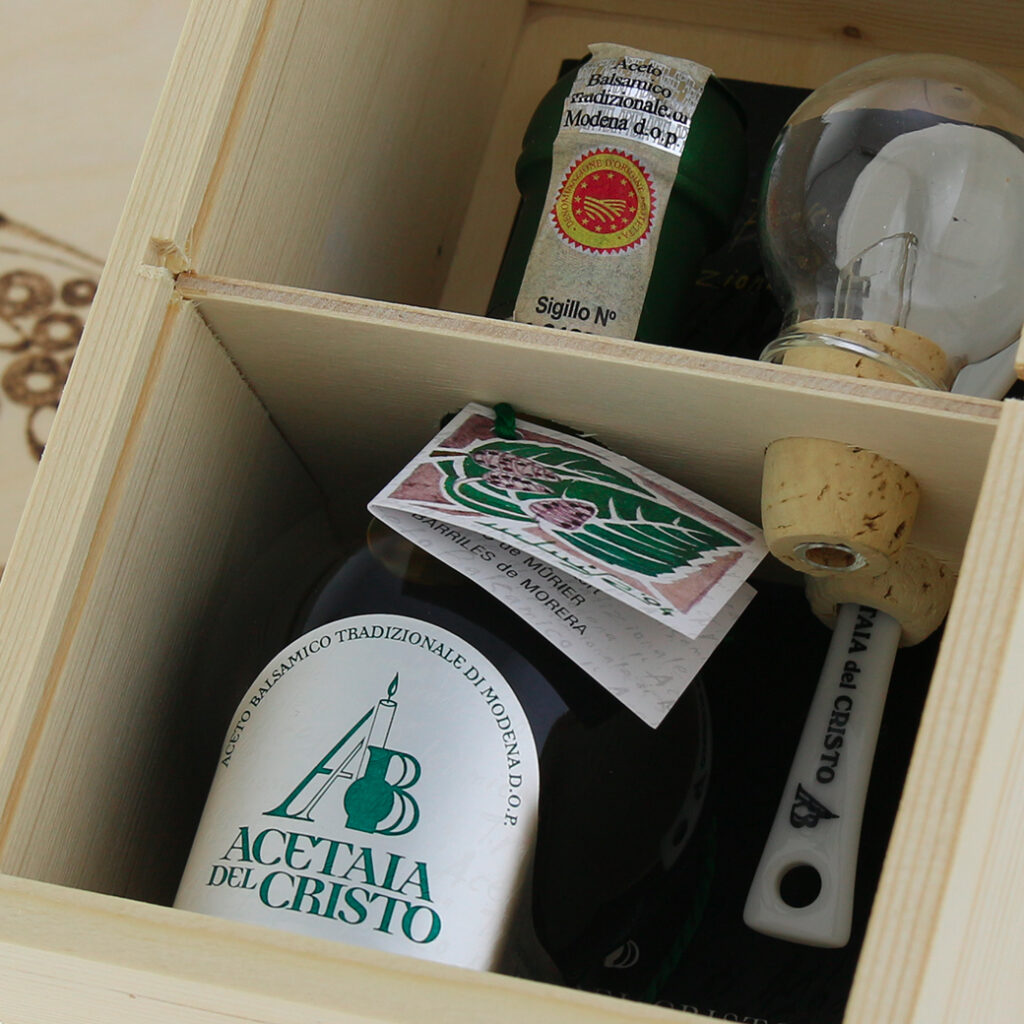
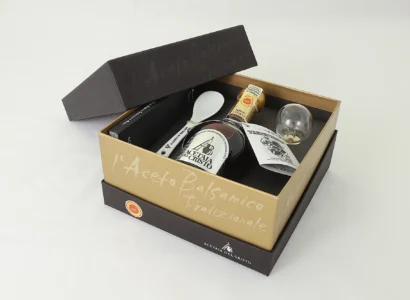
If you want to savour the thousand nuances and aromas of Mulberry, click below, access our shop and choose a traditional balsamic vinegar aged in mulberry barrels such as this one.