Acetic bio-oxidation is a natural phase of transformation of the fermented cooked must that contributes to the creation of the typical aromatic characteristics of Traditional Balsamic Vinegar of Modena DOP.
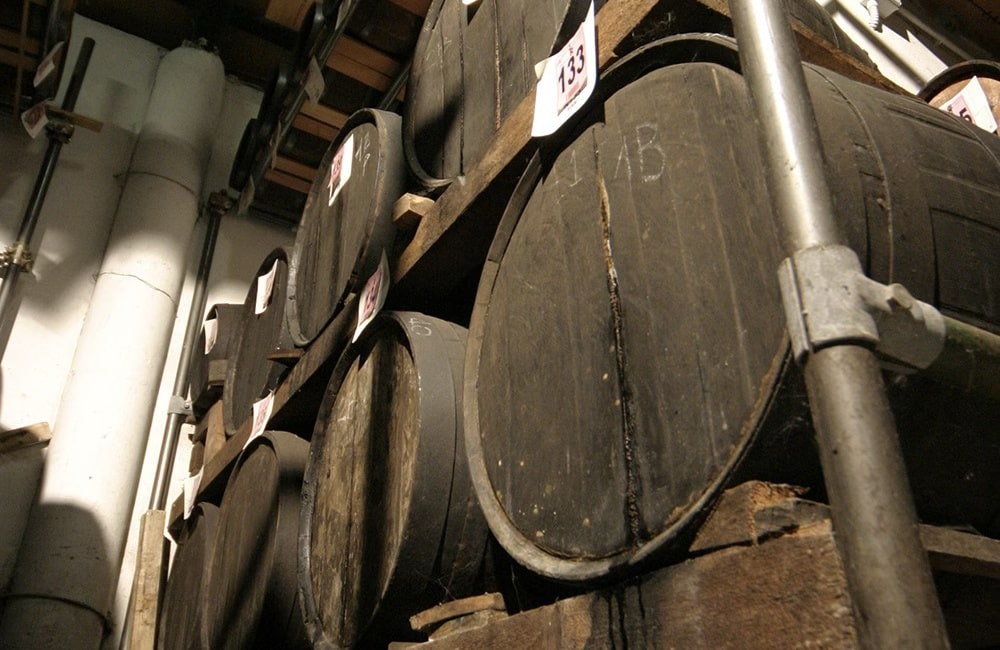
As spring approaches, the fermented cooked must is then added to a series of first barrels, called “badesse” or “mother barrels”, where a good half of the already acetified product permanently resides, a sort of “mother of vinegar”.
Here, every year, the acetobacteria transform the fermented cooked must into must vinegar, which is the raw material for Balsamic Vinegar. Specifically, acetobacteria intervene by “eating” every part of the alcohol and transforming it into vinegar.
The process is completely natural and spontaneous, governed by countless variables related to both the authenticity of the raw materials and their seasonality (annual). At Acetaia del Cristo, we have a surplus of “badesse” that allows us to annually select extraction only from those that have best developed the ideal characteristics of the “acetified must,” which will then be used to supplement the Acetaia’s production “batteries”.
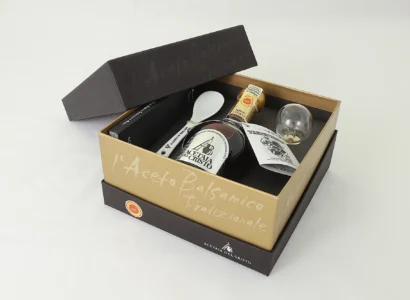
After at least 12 years, it will be possible to draw the “first” Traditional Balsamic Vinegar of Modena DOP, also known as “affinato,” from the smallest barrel in the Battery. This incredible “black gold” will have developed a unique bouquet of aromas, sensations, and fragrances.
By Traditional Balsamic Vinegar of Modena DOP Extra Vecchio, on the other hand, we mean a product aged for at least 25 years, always inside fine wooden barrels, which will have given it even more intense and persistent aromas.