Mother Barrel, acetic bi-oxidation and “mother of vinegar”… what are we talking about?!
Let’s try to go into specifics and give the most correct interpretation possible of these interrelated concepts.
Everything revolves around the meaning of the word ‘Mother’, understood as a parent and as a woman who personally cares for her children and ensures the smooth running of the household, ‘setting it against the backdrop’ of the world of balsamic vinegar.
Mother progenitor as a “graft/starter” of the acetification process which starts by transmitting its characteristics to the child.
A mother who cares for and ensures the healthy growth of her children, thanks in part to the environment she creates around them and the values she teaches them.
The inherent power of the term “Mother” and the versatility of its roles have made it widely used in different contexts, making it a transversal term.
Here, then, are the most widespread and recognized meanings linked to the so-called “Mother of Vinegar”:
It’s popular custom to identify the cuticle that forms on the surface of the necks of demijohns or barrels as the Mother of Vinegar. So much so that it’s moved from one container to another as a graft (in reality, they’re dead cells that act as a sponge for transporting live vinegar containing acetobacteria).
It’s also common to believe that the Mother of Balsamic Vinegar resides, conversely, at the bottom of the barrels. In this case, it “passes down its characteristics,” its family history, and its intense aromas and flavors.
And what’s left for the Mother or Abbess? To welcome and “lovingly” care for all of the above, in order to feed one or more batteries that can be considered her legitimate children!
So, these concepts just expressed, properly related to their context, are all correct. Let’s try to delve deeper into them from a technical perspective.
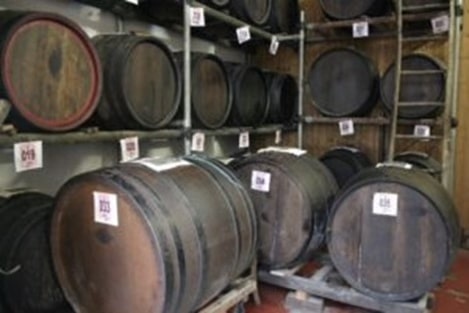
When speaking of a mother barrel, we are referring to a generously larger barrel that feeds one or more batches of Traditional Balsamic Vinegar of Modena D.O.P.
The mother barrel, or “abbess,” is extremely valuable and important, as it is responsible for the first, most difficult and important transformations of the fermented cooked must: acetic bi-oxidation, or “acetification.” A good half of the already acetified product resides permanently inside it, acting as a starter, a sort of “mother.” Its generous dimensions, with a large surface area exposed to direct air, facilitate both the development of bacterial colonies and the subsequent annual topping up of the production batches.
The so-called “mother of vinegar” consists, instead, of a natural aggregation of acetobacteria that is generally found on the surface of alcoholic liquids in the form of a biofilm or film.
These microorganisms promote the acetic bi-oxidation process, which converts the alcohol contained in the fermented cooked must into acetic acid. Depending on the bacterial strain involved, the film can have different consistencies and thicknesses, resulting in:
a thick layer of cellulose that forms on the neck of the demijohn when the wine turns to vinegar.
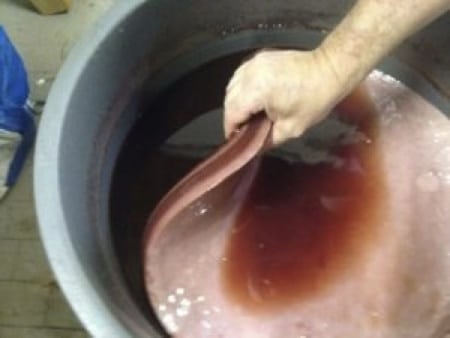
a thinner film, resistant to low pH values and tolerant to high sugar concentrations is more widespread in the case of Traditional Balsamic Vinegar of Modena.
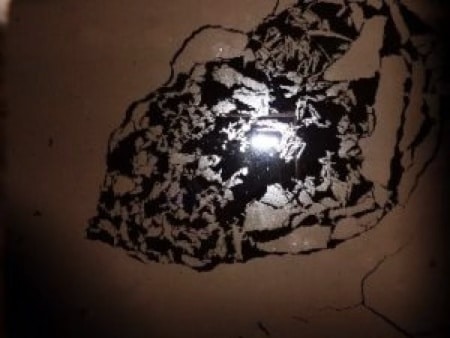
Finally, there is the mother preserved by the “Fondi” in the barrels, the so-called “humus” of the Balsamic Vinegar. The longer the sedimentation period lasts during aging, the more valuable the “fonda” itself becomes.
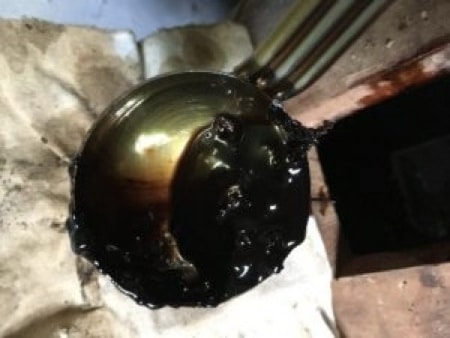
Please note: this is not the precipitation of the thick cuticle that should always be promptly removed, but rather derives from precipitations and mineral aggregations of the “noble” substances contained in the musts!