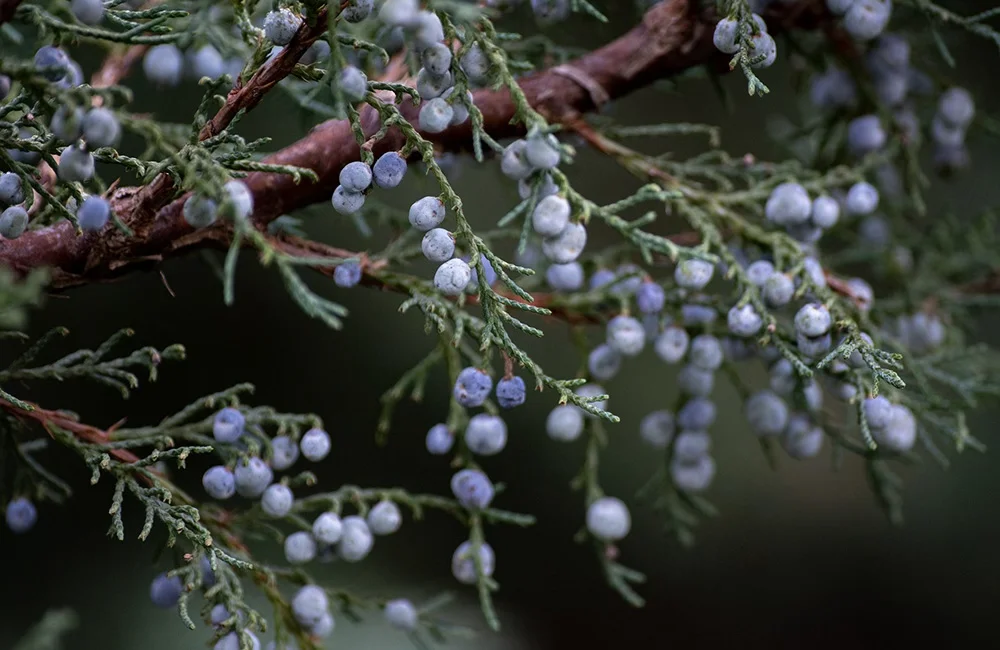
Juniper is now a rare and therefore protected plant, and the yield of this type of wood is low. In fact, it takes on different forms depending on the environment in which it grows: a small tree in the valleys and a bushy shrub on the slopes of hills and mountains.
Furthermore, building a juniper barrel requires a large number of staves, the production waste is very high, and the resulting vessels are usually small. It’s easy to imagine that for these reasons, the costs are also high.
Thanks to its distinct aromatic characteristics, this wood releases very pungent and strong flavors over several years; this is why some producers keep juniper barrels outside of the set, without using them to complement the other vessels in the series.
Juniper Barrel
After at least 10-15 years, the product’s flavor begins to mellow and take on a more elegant personality, with a precious and unmistakable bouquet.
Traditional Balsamic Vinegar aged in juniper wood thus acquires all these distinctive aromas that give it spicy, almost piquant tones. Clear traces of resin in the base leave an elegant and persuasive finish that invites further tasting.
The culinary advice therefore calls for pairing Traditional Juniper Balsamic Vinegar with boldly flavored meats such as game or beef fillets, Fassona steaks, or even fried foods in general, in order to mutually enhance the dish and the vinegar itself.